

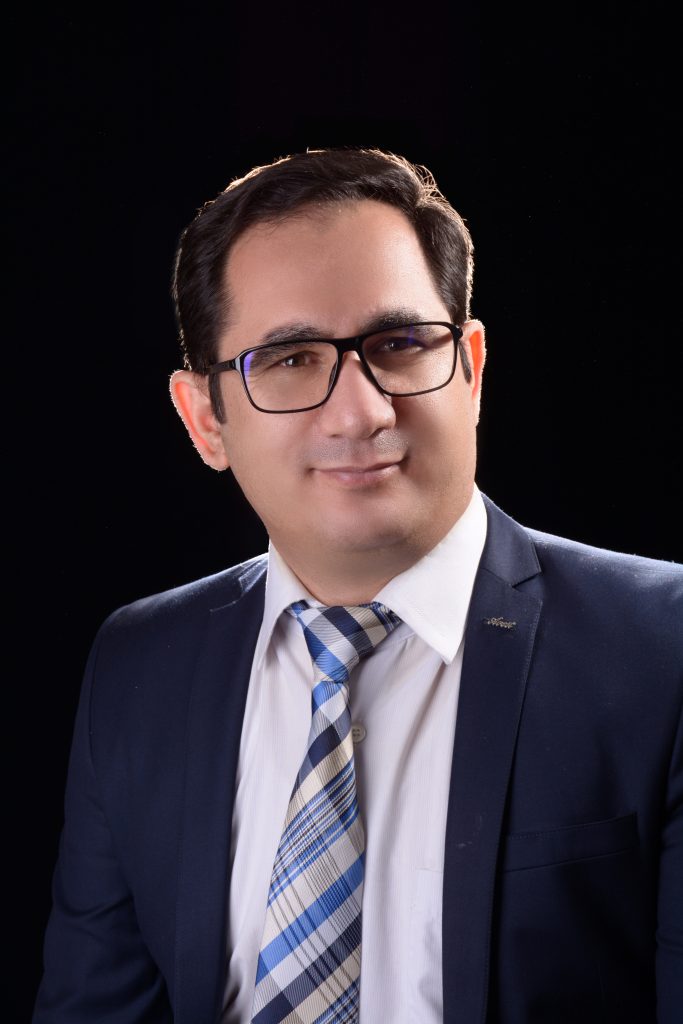
I’m Ali Nikfal, a senior telecommunications and mobile network architect with over 14 years of hands-on experience designing and deploying next-generation network infrastructure.
I was born on August 23, 1985, in a small village in Ardabil Province, northwest Iran. From an early age, I had a deep curiosity for science and technology, which led me to consistently rank top of my class throughout my education. I began my schooling at Shahid Ahmad Lotf Hagh Primary School (1992–1997), graduating with the highest marks (20/20). I then passed Iran’s national entrance exam for gifted students and was accepted into Omid Enghelab Talented School in Ardabil, where I completed middle school with distinction.
Continuing this academic path, I was accepted into Sheikh Mofid High School for gifted students, where I pursued a concentration in Mathematics and Physics, graduating in 2003.
In 2004, I moved to Tehran to begin my Bachelor’s degree in Information and Communication Technology (ICT) Engineering with a focus on Data Communication, at the University of Applied Science and Technology – ICT Faculty of Tehran. I completed my degree in 2008. My final project involved the implementation of a mobile WiMAX testbed, which was successfully demonstrated and endorsed by Dr. Amidian, Vice President of Iran’s Ministry of ICT.
During my Bachelor studies, I worked to support myself financially, starting my career as a field service engineer in mobile network maintenance. This hands-on role introduced me to the practical world of telecom infrastructure—working with technologies such as Nokia Talk Family, UltraSite, and Ericsson RBS 2100 series. It gave me early exposure to integration, commissioning, and maintenance of radio and transmission equipment in live environments.
As part of my undergraduate final project, I extensively used OPNET Modeler to simulate hundreds of mobile and computer network topologies. These included multi-layer, protocol-driven simulations which I later provided to local companies and individuals as functional models for training and development use.
My first full-time role in 2008 was as a Fiber Optic Engineer on Iran’s national fiber backbone projects. I was responsible for supervising subcontractors, verifying the quality of installation, and overseeing urban, suburban, and intercity cabling deployments. This role deepened my understanding of Layer 1 network design and large-scale project coordination.
Driven by a strong passion for mobile technologies, I joined Huawei Technologies in 2010 as an Online Charging System (OCS) Engineer. I worked on the integration, configuration, and maintenance of charging systems that served over 40 million prepaid subscribers. I was specifically responsible for managing and monitoring OCS links across four regional zones, using tools such as SolarWinds, Huawei iManager, PRTG, and server-side operations like backup, upgrades, and troubleshooting of critical real-time services(2010-2013).
My passion for learning and advancing in telecom led me back to university in 2013, where I passed the national MSc entrance exam and was accepted into the Information Technology – Secure Communication program at Iran University of Science and Technology (IUST), one of the top five technology universities in Iran. As a part-time student (2013–2016), I gained deep knowledge in cellular networks, digital signal processing (DSP), image processing, cybersecurity, and cryptology.
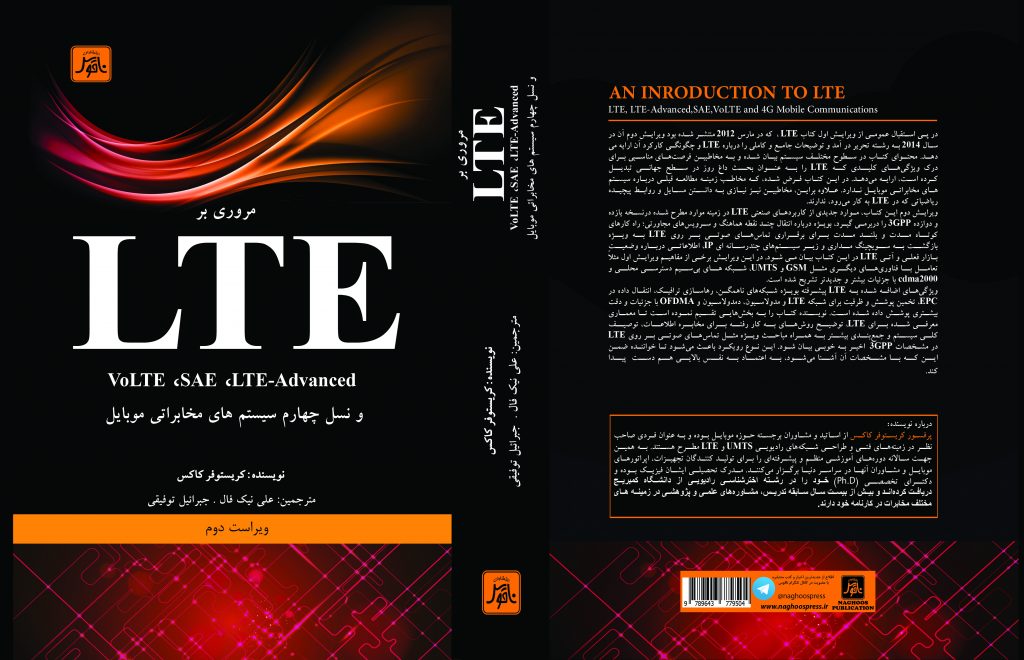
This academic journey further fueled my interest in mobile networks, and in parallel, I took on a personal project to translate the renowned book “An Introduction to LTE, LTE-Advanced, SAE and 4G Mobile Communications” (Second Edition) by Christopher Cox into Persian. The translation was completed and published in 2015 to support wider access to LTE knowledge among Iranian engineers and students.
Throughout my MSc studies, I remained active in the industry. I joined MCI (Mobile Communications of Iran) — the largest mobile operator in the Middle East with over 70 million subscribers — as a Value-Added Services (VAS) Engineer, where I worked on service monitoring, KPI tracking, incident resolution, and performance optimization of core network services.
In late 2013, I joined NAK (Naghsh Aval Keyfiat) — the largest managed services company for mobile networks in Iran and a subsidiary of MCI — as a Mobile Backhaul & Infrastructure Network Operations Engineer. This role significantly expanded my practical knowledge of Layer 2/3 technologies and gave me hands-on experience with end-to-end troubleshooting across one of the most complex mobile infrastructures in the region.
The network I supported included:
- Over 20,000 microwave links,
- More than 15,000 fiber optic links,
- Thousands of SDH/PDH circuits, and
- Over 5,000 Layer 2/3 devices providing nationwide mobile transport services.
Within a year, in 2014, I was promoted to Technical Team Lead, where I led and trained a group of junior engineers. I personally mentored more than 60 engineers, helping them grow from new hires into confident telecom professionals.
My training strategy was straightforward but effective: I designed a learning path that progressed from simple to complex concepts, always rooted in real-world examples and hands-on lab environments. To support this, I set up a training lab within our office, allowing team members to test configurations, simulate faults, and build confidence in a safe and controlled space.
Once foundational skills were in place, I transitioned trainees into on-the-job training, starting with walkthroughs, shadowing, and remote support on lower-priority tasks. This gradual, hands-on approach helped engineers build independence, problem-solving skills, and confidence.
I strongly believe that deep understanding of core concepts and protocols is essential for tackling real-world network issues. That’s why my training also emphasized not just “what” to do — but why it works — encouraging engineers to think analytically and troubleshoot with confidence.
During this transformative period, I witnessed and contributed to a 1,200% increase in network capacity while playing a key role in several national-scale telecom initiatives. I was directly involved in launching UMTS (3G) across the country, including secondary and third carrier frequency additions, and led the Abis over IP migration project, modernizing the transport layer for the entire 2G network. Additionally, I contributed to Wi-Fi offloading over 3G in Tehran and other major cities, improving mobile data efficiency and user experience.
One of the most significant milestones in my career came with MCI’s Phase 7 Integration Project — one of the largest telecom projects in the world at the time, with an investment exceeding $1 billion USD. The project aimed to launch LTE/LTE-Advanced and increase RAN capacity by 300% nationwide. I was responsible for managing the infrastructure operations side of the project, overseeing OSS integration, change control, and service continuity.
Despite the scale and complexity, my team successfully delivered over 28,000 new LTE sites into the live network without major incidents, strictly following audit, checklist, and quality assurance processes. We ensured all new sites were added to the OSS and were fully monitored and integrated into operational workflows from 2015 to 2016.
Following this rollout, the operator shifted focus to network optimization and 4G frequency layer additions, and I actively supported this evolution. From 2015 to 2017, my team expanded from 8 to 23 engineers, many of whom were recent graduates. As mentioned earlier, I personally trained every team member using my structured, lab-based training method.
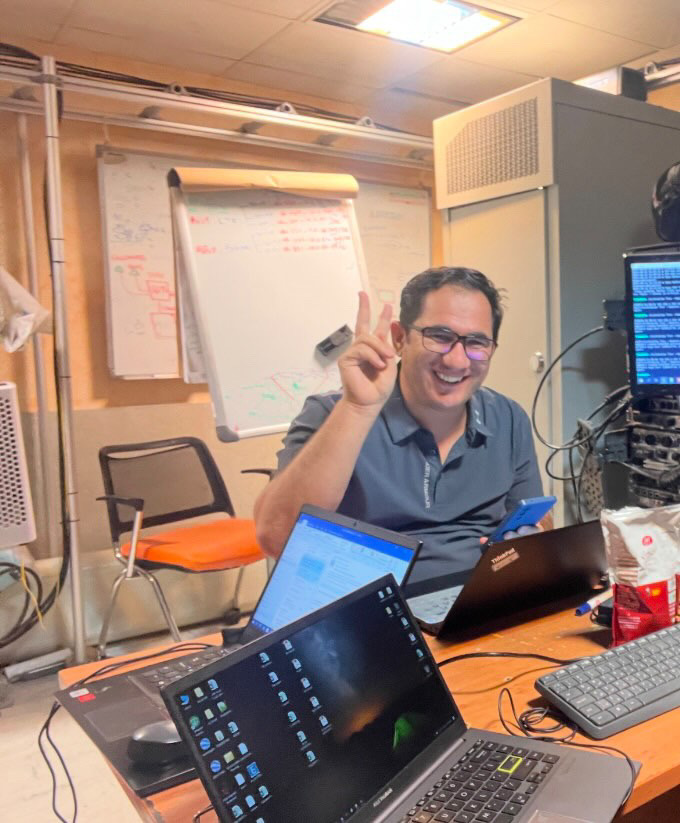
Alongside my operational responsibilities, I continued to pursue my passion for learning and lecturing. Since 2015, I have delivered nationwide technical training sessions on mobile network fundamentals, backhaul technologies, and OSS to staff at NAK, MCI, and TCI, as well as to college students across Iran. I also became an early online telecom educator, launching my first 5G livestream training via Instagram and YouTube in 2017, helping to spread foundational 5G knowledge at a time when it was still emerging in the region.
My deep knowledge in 5G technology and track record in both live network operations and academic training convinced the CEO and CTO of NAK to entrust me with leading MCI’s first national 5G pilot project — a multi-million-dollar initiative that marked a major turning point in my career.
At the time, launching 5G in Iran posed significant challenges. We lacked direct access to major vendors, and no blueprint existed for deployment. To overcome this, I proposed and personally built the country’s first 5G lab within Kimia Building, creating a dedicated environment for 5G testing, integration, and development — bridging academic research and telecom industry practices.
In 2019, we successfully launched Iran’s first functional 5G node in the lab. This achievement gained executive attention and triggered further investment from the board. I was then asked to scale the project nationwide, starting with strategic sites across Tehran and expanding to over 300 locations across the country.
Every one of these 5G sites was successfully deployed, tested, and handed over to the Network Operations (NO) team with full OSS integration and operational readiness.
The 5G lab became a foundational hub for vendor testing, innovation, and talent development. We successfully integrated and launched 5G services using equipment from all major vendors, activated the first 5G IBS nodes, and deployed 5G on the B41 (2300 MHz) band.
What made the journey even more meaningful was seeing my legacy carried forward. Several of the engineers I mentored in the 5G lab later developed an innovative mobile antenna configuration that went on to win the 2023 Gold Medal at an International Innovation Competition — a proud moment that reflects the lab’s long-term impact on both national infrastructure and young engineering talent.
Since moving to the UK in October 2022, I’ve had the opportunity to immerse myself in one of the world’s most advanced technology environments. I joined Blu Wireless, a pioneering company in 5G mmWave solutions, as a Senior Field Application Engineer—supporting global clients with pre- and post-sales technical services.
My responsibilities include delivering pre-sales demos, handling Node First Integration (NFI), and providing technical support and troubleshooting post-deployment. I’ve worked directly with customers across the globe, supporting the deployment and integration of innovative 5G FWA, Mesh IoT nodes, and High-Speed Train (HST) communication systems.
I’ve also taken on a hands-on role managing our infrastructure network, virtual environments, and Docker-based platforms, while ensuring smooth operations of all field-deployed devices.
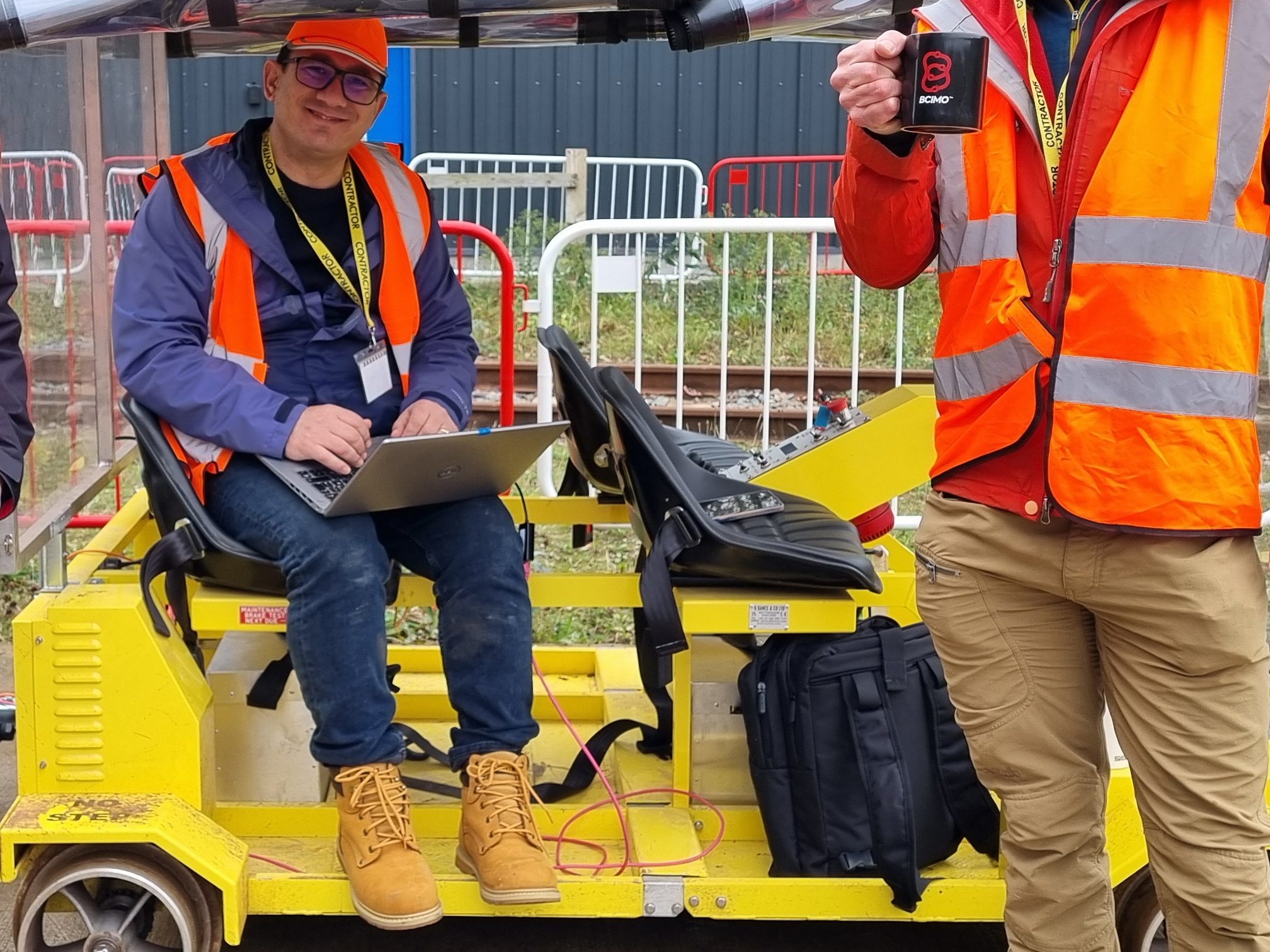
A key part of my role has been leading observability and monitoring for our device ecosystem—upgrading and managing InfluxDB, setting up real-time dashboards in Grafana, and maintaining our LibraNMS SNMP-based monitoring systems. I also participate in R&D-based testing, conducting both indoor and outdoor trials, which has deepened my technical understanding of wireless systems under real-world conditions.
This role has not only expanded my hands-on skills in OSS monitoring, virtualization, and diagnostics, but also allowed me to work on cutting-edge 5G mmWave and IoT deployments in one of the most advanced telecom ecosystems in the world.
My goal is to prepare myself for the era beyond 5G—actively positioning myself for the transition to 6G technologies. I am already deeply engaged in exploring the future of cloud-native networks, end-to-end orchestration, AI/ML-driven automation, and the convergence of terrestrial (TN), non-terrestrial (NTN), and even underground communication systems. Concepts like tactile internet, Nano-IoT, and Bio-IoT are set to revolutionize connectivity—and I aim to be at the forefront of this evolution.
I believe 6G will not only transform industries but also require a new generation of engineers who can blend technical innovation with business strategy. With my background in technical project management (PMP), Agile leadership (PSM1), and infrastructure deployment at national scale, I aim to bridge the gap between investment and impact—helping companies adopt next-gen technologies while ensuring sustainable revenue models and measurable outcomes.
My mission is to contribute to building intelligent, adaptable, and scalable networks—while empowering organizations to make smart investments that deliver long-term value in the age of AI-powered connectivity.